
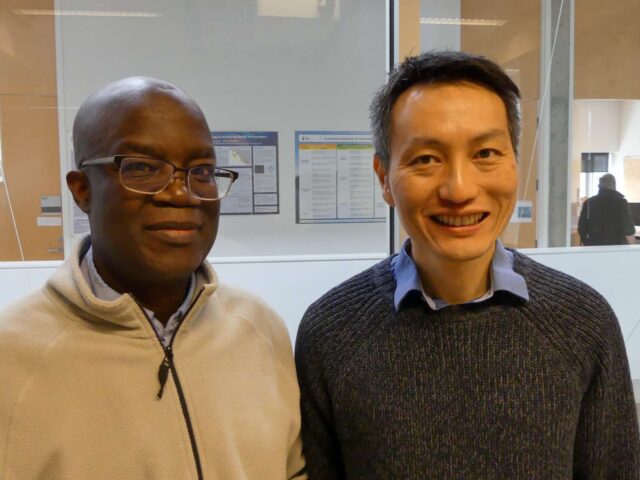



IOF Seminar – Solving the Sustainability Challenges to Achieve Desirable Ocean Futures at the FCB Nexus
This IOF Seminar was held at the Aquatic Ecosystems Research Laboratory at the University of British Columbia on September 13, 2024.

Adaptation to climate change and limits in food production systems: Physics, the chemistry of biology, and human behavior
Nelson, G. C., Cheung, W. W. L., Bezner Kerr, R., Franke, J., Meza, F., Oyinlola, M. A., Thornton, P., & Zabel, F. (2024). Adaptation to climate change and limits in food…

Solving-FCB Q3 ’24 Meeting Update
On the 9th of September 2024, many project members met on Zoom to catch up and share our activities since the last meeting. These are updates from the meeting.

Seminar – Solving the sustainability challenges to achieve desirable ocean futures at the food-climate-biodiversity nexus
Solving the sustainability challenges to achieve desirable ocean futures at the food-climate-biodiversity nexus

New Study: Climate change alters social-ecological trade-offs in achieving ocean futures’ targets
The effects of climate change on marine ecosystems are causing cascading impacts on livelihood, food security, and culture through fisheries.

William Cheung wins UBC Alumni Achievement Award
Congratulations to Changing Oceans Research Unit leader Dr. William Cheung who has been awarded the UBC Alumni Achievements Award for Research and Innovation.

Media Coverage Roundup Q2 2024
A round-up of all media coverage covering activities either directly supported by or related to the Solving-FCB Partnership and our members in Q2 of 2024.

Basic income could solve global poverty and stop environmental destruction – Media Summary
What if if the path to a more prosperous and sustainable future involved providing financial support to everyone?

Increasing temperatures and salinity result in decreased ecosystem diversity, UBC study finds.
Ecosystems can be impacted and changed by a lot of different things, including human activities, stormwater runoff, contaminants, invasive species, and climate change.

Basic income could solve global poverty and stop environmental destruction, study finds
Originally posted at oceans.ubc.ca. Providing a basic income could boost global gross domestic product (GDP) by $US163 trillion while acting to curb environmental degradation, UBC research has found. An analysis…
A traits-based approach to assess aquaculture’s contributions to food, climate change, and biodiversity goals
A new Solving-FCB Paper states that aquaculture can support UN SDGs on food security, climate, and biodiversity, and diverse species like algae and molluscs are key for sustainable systems.
Solving-FCB Q2 ’24 Case Study Update
On the 4th of April, 2024, many project members met on Zoom to catch up and share our activities since the last meeting. These are updates from each of the case studies.
